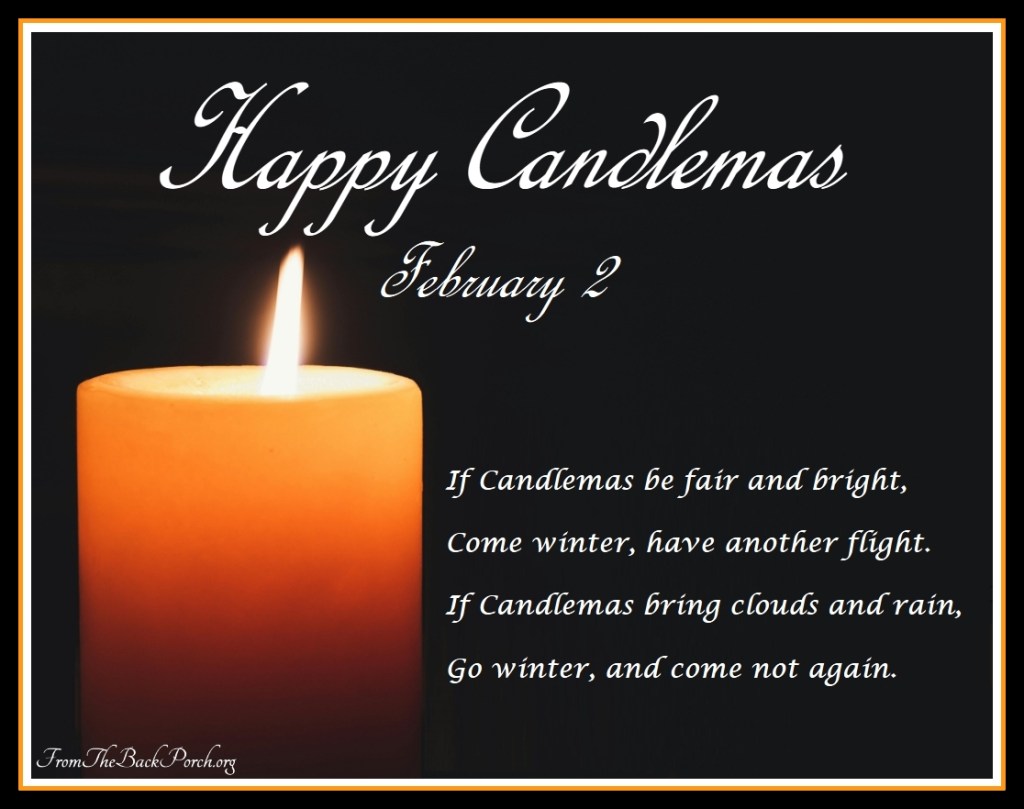
February 2 is the Feast of the Presentation in the Temple, or Candlemas, commemorating the occasion when Mary, in obedience to Jewish law (Leviticus 12:1-8; Exodus 13:1-2,11-15), went to the Temple in Jerusalem both to be purified 40 days after the birth of her son, Jesus, and to present him to God as her firstborn (Luke 2:22–38).
Candlemas falls on Groundhog Day, but the first known Candlemas reference was in the 4th century, so it predates our groundhog. Each year the eyes of the weather world focus on Punxsutawney, Pennsylvania to see if Phil sees his shadow. This tradition came out of an old English poem about Candlemas:
If Candlemas be fair and bright,
Come winter, have another flight.
If Candlemas bring clouds and rain,
Go winter, and come not again.
So, it looks like we are giving a nod to Candlemas when we watch Phil searching for his shadow. Pretty cool. Isn’t it interesting to find the Christian roots behind our traditions?
Candlemas has several traditions depending on the cultural and religious context. Here are a few ways it’s celebrated:
- Christian Traditions:
- Blessing of Candles: Churches often bless candles on this day, symbolizing Jesus Christ as the light of the world. Congregants may bring candles from home to be blessed, which they then use for the rest of the year.
- Processions: Some communities hold processions with candles to symbolize bringing light into the world.
- Weather Lore:
- In some cultures, Candlemas is linked to weather predictions. As the poem suggests, the weather on Candlemas Day is thought to predict the remaining length of winter. This tradition is similar to Groundhog Day in the United States.
- Festive Meals:
- In some regions, people celebrate with special meals or desserts. For example, in France, it’s traditional to make crêpes on Candlemas (La Chandeleur).
- Purification and Presentation:
- For many Christians, Candlemas commemorates the presentation of Jesus in the Temple and the purification of Mary, as described in the Gospel of Luke.
It’s a time rich with symbolism and history, celebrating both the end of the Christmas season and the hope of light (The Light) returning as winter wanes.





 From The Back Porch